Cincu, Tell Me Your Story! Children Bringing Their Community’s Heritage to Life
- July 8, 2026
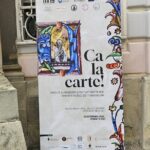
In Cincu, a small village in Transylvania, Romania, 28 children and young people became researchers, storytellers, and exhibition curators. They collected childhood memories from their parents and grandparents, discovered the stories behind objects kept in their homes, and imagined what their village might look like in 50 years. Their work resulted in Cincu, Tell Me Your Story!, an exhibition hosted by Muzeul Lolelor (The Lole Museum) between 28 June and 12 July 2026, as part of the Restory project.
Discovering the stories close to home
Cincu has a rich cultural heritage, shaped by the people and generations who have lived there. While some of this heritage is preserved in historic buildings, monuments, and local traditions, much of it survives in family memories, everyday objects, and stories passed down between generations. Bringing these stories to younger generations was at the heart of the Restory summer school on oral history and storytelling, organised by Babeș-Bolyai University’s Oral History Institute and C.School for Creative Acts, with the support of Cincu Town Hall and Muzeul Lolelor.
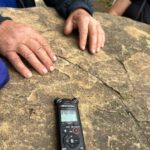
Over three days, from 25 to 27 June 2026, children and young people learned how to collect, document, interpret, and share stories about their community. Guided by researchers specialising in oral history, they interviewed parents and grandparents about their childhood in Cincu. They also brought old objects from home, together with the stories behind them. Wall clocks, ceramics, carpentry and shoemaking tools, textiles, coins, photographs, and personal documents gradually revealed fragments of everyday life in the village.
For many participants, these were familiar objects and family stories. The challenge was to look at them differently, understand their connection to the community’s history, and find ways to share their meaning with others.
From family memories to a community exhibition
The children had only a few days to turn their discoveries into an exhibition. Alongside the interviews, they had to select and present objects, prepare their stories, create visual materials, and decide how visitors would experience their work.
With the guidance of C.School and Muzeul Lolelor, they worked together to bring the different elements into a shared exhibition. They also explored Cincu beyond its past. Through drawings and sketches, they represented the village as they see it today and imagined how it might develop by 2076. Their work brought together memories inherited from older generations and their own experiences, wishes, and ideas for the future.
By the end of the summer school, the exhibition included 12 recorded oral history interviews, around 20 larger objects alongside smaller family belongings, drawings and sketches, and a behind-the-scenes film made by the young participants themselves.
The children were involved throughout the process, from collecting and interpreting stories to arranging the exhibits and preparing to welcome visitors.
The community discovers its stories through children’s eyes
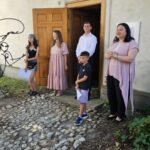
On 28 June, approximately 50 people gathered at Muzeul Lolelor for the exhibition opening. Among them were the young participants, their families, local representatives, researchers, and other members of the community.
Two children opened the presentation on behalf of their group, inviting visitors to discover the stories they had collected and their vision of Cincu in 2076. Parents and grandparents encountered familiar objects and memories, now presented through the interpretations of the younger generation. They listened to interviews, watched the behind-the-scenes film, and explored the drawings showing how children see their village today and what they imagine for its future.
The exhibition also encouraged visitors to share additional memories and experiences. Family stories became part of a wider conversation about local traditions, community identity, and the things people would like to preserve for future generations.
For the children, the opening was an opportunity to present something they had created together. They were proud to explain the objects, share the interviews, and show visitors how the exhibition had taken shape. Their enthusiasm extended beyond the event. Several children asked when the Restory team would return and expressed their interest in taking part in similar activities.
The exhibition remained open for two weeks, with young volunteers from the community helping visitors discover its contents.
Taking the stories further
The Cincu experience brought together several generations around the heritage of their village. Children learned from their parents and grandparents, took responsibility for family objects temporarily entrusted to them, and shared their own perspectives on the community’s past, present, and future.
It also offered a practical example of how oral history research can be combined with experiential education, storytelling, and community participation. Researchers, educators, a local museum, public authorities, volunteers, families, and businesses contributed in different ways to making the activities possible.
The approach developed in Cincu can be adapted by other small communities interested in engaging younger generations with their local heritage. A short educational programme, built around family interviews and everyday objects, can lead to a public exhibition or another event where community members meet, share memories, and explore their common heritage.
For the children of Cincu, the experience began with stories from their families and ended with an exhibition they could proudly share with their village. Along the way, they became part of the process of preserving, interpreting, and passing on their community’s heritage.
About Restory
Restory – Recovering Past Stories for the Future is a research and innovation project funded by the European Union through the Horizon Europe programme (Grant Agreement No. 101132781). Coordinated by Babeș-Bolyai University in Cluj-Napoca, Romania, the project brings together 20 partners from 12 European countries to explore the written and oral heritage of small communities and develop participatory approaches to researching, interpreting, and sharing cultural heritage.